
The steps in brief
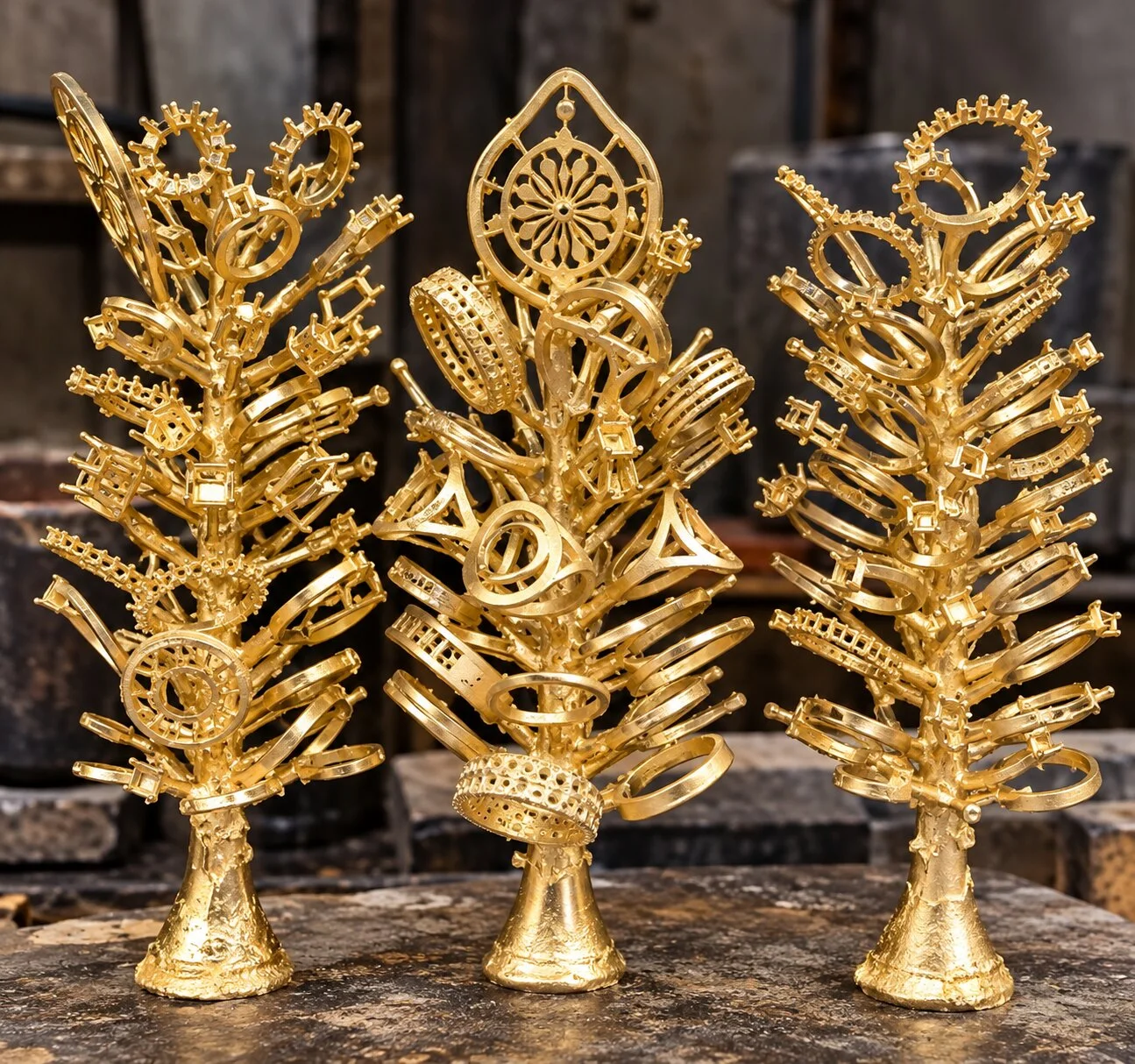
Models from casting resin or wax are attached to a central sprue and create a "tree". The tree is placed in a cylinder, surrounded by mould material, and burned in a furnace so the model evaporates and leaves a cavity. Molten metal is cast into the cavity.
After cooling, the mould is broken, the items are cut from the tree, and they are passed for cleaning and finishing.
- Model preparation
- Casting tree construction
- Mould and burning
- Casting and cooling
- Cutting and cleaning
Metal and labour — two separate components
A formal proposal separates the labor cost from the metal cost. Casting labor depends on size, quantity, and complexity. The metal cost depends on the item weight and the metal market price on the order date.
This separation is especially important for gold: a change in the price of gold affects only the metal component and not the labor.
What affects the result
Wall thickness, tiny details, sharp angles, and large surfaces affect the success of the casting. A properly designed model saves on finishing work and repairs.
Therefore, we examine every model before production and raise questions if something might be problematic.
Brass, silver, or gold — what is the difference in work
Brass is often used as an intermediate stage: for testing the casting of a new model, for low-price series, or for items that will be plated later. It allows seeing the model in metal form without investing in expensive material.
925 silver fills molds well, but tends to tarnish and requires careful polishing and cleaning. 14K and 18K gold require attention to the alloy shade and weight, because every tenth of a gram is translated into material cost. Therefore, before casting in gold, it is worth approving the model, and if possible — performing a test in cheaper material.
Quantities and series
Casting a single item and casting a series are different jobs. In a series, it is possible to build a casting tree with many items, and this affects the pricing per unit. For a single item, the preparation work is divided over one item.
Goldsmiths and businesses that order regularly can contact us to inquire about working terms. The public price list on the site refers to production work only and serves as a starting point.
How to request a proposal
Send a file or images, and specify the metal, quantity, and desired finish. The production calculator on the site provides an initial estimate for labor, and the final proposal is given after checking the specification.
Process images on the site are for visual illustration only.